.webp)
EGYPT, THE LAND OF MILK AND HONEY?
- Avigail Gimpel
- Jun 11
- 6 min read
How Fear Rewrites Reality
PARSHAT KORACH
In memory of our holy soldiers who fell sanctifying God's Name and defending the Land of Israel:
Ephraim ben Liat v'Shmuel, Yosef Malachi ben Dina v'David, Eliyahu Moshe Shlomo ben Sarah v'Shimon, Yosef Chaim ben Rachel v'Eliyahu, Netanel ben Revital v'Elad, Yakir ben Chaya v'Yehoshua, and Ran ben Sara v'Kenny.

Lately, I've been having a similar reaction every time I read the news: How can people not see what is right in front of them? Entire situations seem to get turned upside down. Things that are obviously harmful get defended. Things that are obviously good get treated as threats. Reality itself can start to feel strangely inverted.
Then I came across a verse in Parshat Korach that gave me that exact feeling. I had to stop and read it twice because it sounded less like an ancient story and more like something I could have read this week.
Perhaps the most startling claim in the parsha comes from Datan and Aviram:
הַמְעַט כִּי הֶעֱלִיתָנוּ מֵאֶרֶץ זָבַת חָלָב וּדְבַשׁ לַהֲמִיתֵנוּ בַּמִּדְבָּר
"Is it not enough that you have brought us up from a land flowing with milk and honey to kill us in the wilderness?"
Egypt is suddenly described as a land flowing with milk and honey.
The nation that endured slavery, beatings, and the murder of their children now speaks about Egypt as though it were paradise.
How is such a statement possible?
This is not simply rebellion. It is the inversion of reality itself.
Perhaps that is why it feels so unsettlingly familiar. The rewriting of the past, the reversal of victim and oppressor, the transformation of bondage into freedom and freedom into captivity are not new phenomena. They are ancient and frighteningly human ones.
Parshat Korach invites us to ask how Datan and Aviram could say such a thing and how human beings can become so convinced by a distorted narrative that they fail to recognize reality when it stands before them.
How Did We Get Here?
Over the last two parshiot we have watched a process unfold.
In Beha'alotcha, Moshe models humility. He knows what belongs to him and what does not. He carries responsibility without trying to control the thoughts, feelings, or choices of others.
In Shelach, the spies begin as observers but gradually move beyond what they actually know. They interpret, project, imagine, and eventually speak for the entire nation. Their fear grows in direct proportion to how much they step beyond their proper boundaries, taking responsibility for what is not theirs to know, control, or decide.
Now, in Korach, we encounter the next stage.
Fear has matured into something even more dangerous: a lens through which reality itself is viewed.
Datan and Aviram
The generation is living in the aftermath of the spies. The dream of entering the Land has collapsed, and an entire generation has been told that it will die in the wilderness. Hope has been replaced by waiting, purpose by wandering.

Moments like this leave people vulnerable. When confidence in the future disappears, the past can begin to exert a powerful pull.
Fear changes the way we process reality. As it grows, the mind begins searching for certainty. Complexity becomes exhausting, nuance uncomfortable, and ambiguity threatening.
When hopelessness is added to fear, the process deepens further. If there is no future worth moving toward, the past can become idealised. Familiarity begins to feel safer than truth.
That is the emotional state in which Datan and Aviram speak.
Suddenly, Egypt no longer appears as a place of slavery but as a place of abundance and security. The promise of the future is eclipsed by a nostalgic vision of the past.
Even more striking is their response when Moshe calls for dialogue.
"We will not come."
Moshe reaches out and seeks conversation, yet they refuse.
Why?
Because dialogue requires some shared commitment to reality.
Once Datan and Aviram became convinced that Egypt was paradise and Moshe was their oppressor, every invitation appeared to be a trap and every explanation sounded like manipulation.
But there may be something even deeper hidden in their choice of words.
Datan and Aviram do not simply say, "We will not come."
They say:
לֹא נַעֲלֶה
"We will not go up."
Only one parsha earlier, the spies declared:
לֹא נוּכַל לַעֲלוֹת
"We cannot go up."
And Calev responded:
עָלֹה נַעֲלֶה
"We shall surely go up."
The spies said they could not go up.
Datan and Aviram say they will not go up.
What began as fear has become certainty.
What began as doubt has become rejection.
The story of the spies is not over.
It is still unfolding in Korach.
The Aggressive Language
When Moshe summons Datan and Aviram, their response becomes even more striking:
הַעֵינֵי הָאֲנָשִׁים הָהֵם תְּנַקֵּר לֹא נַעֲלֶה
"Will you gouge out the eyes of those men? We will not come up."
What exactly are they accusing Moshe of?
They no longer see him as a leader. They see him as someone attempting to deceive, manipulate, and blind.
The image they chose is telling. To gouge out someone's eyes is to prevent them from seeing reality. Datan and Aviram are convinced that Moshe is hiding the truth from the people.
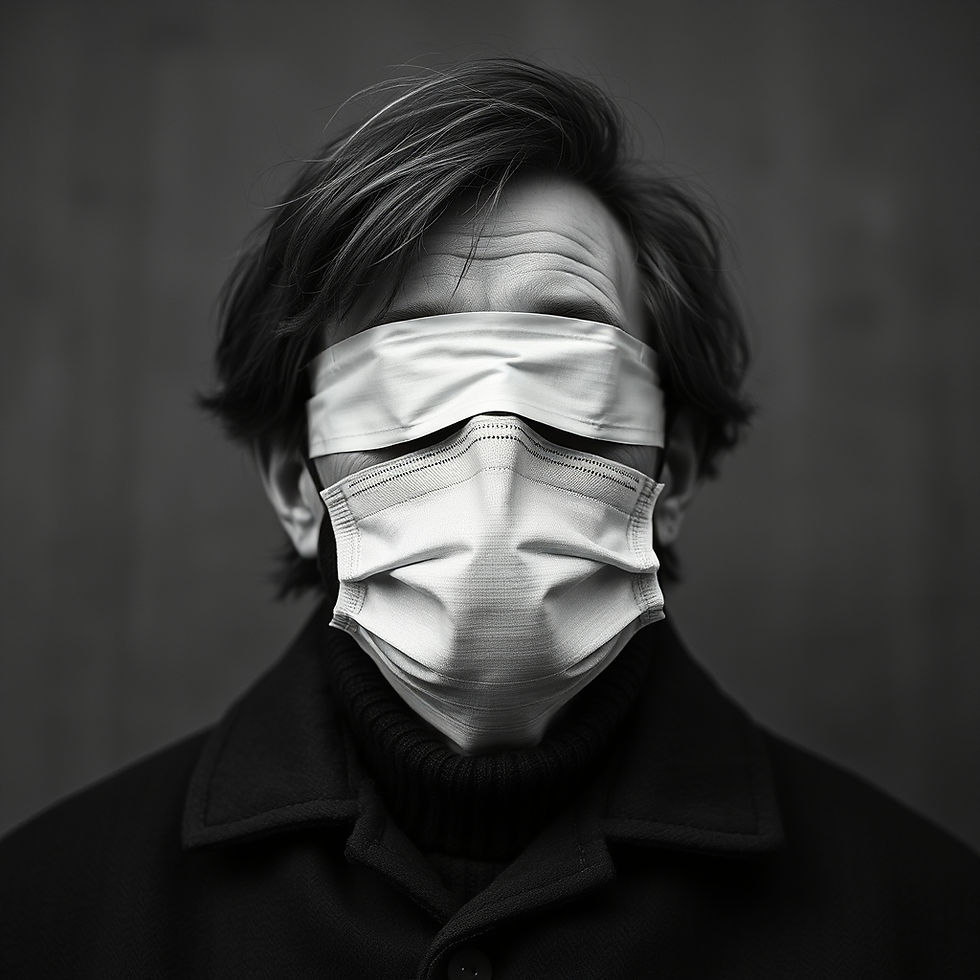
In their minds, they are the ones who see clearly.
Moshe is the one trying to blind everyone else.
Throughout the Torah, Moshe repeatedly places himself between the people and destruction. He prays for them, defends them, and even offers himself on their behalf.
Yet Datan and Aviram now experience him as a threat.
Moshe has not changed; their perception has.
Once someone is viewed through that lens, every action becomes evidence for the story. An invitation to dialogue becomes manipulation. Leadership becomes domination.
This may be one of the Torah's deepest warnings about fear. When fear hardens into certainty, it changes what we are capable of seeing.
Korach's Opportunity
Korach appears immediately after the spies.
The nation has just lost confidence in its future. Fear and disappointment have created deep uncertainty.
But Korach did not create this distorted way of seeing. Datan and Aviram show us that the distortion was already present.
Korach's genius was recognizing it and giving it a story.
Instead of wrestling with a painful and complicated reality, he tells the people that their suffering has a clear cause:
Moshe, Aharon, those in charge.
If things have gone wrong, someone can be blamed.
Korach offers something else as well:
Certainty.
He gives the people a story that explains their pain and identifies a villain.
A complicated reality requires patience, responsibility, and self-reflection.
A simple story requires only agreement.
For people struggling with fear, certainty can feel more compelling than truth.
Is This a Universal Human Pattern?
The Torah appears to be describing a recurring human vulnerability.
When fear and hopelessness take hold, people can lose trust in reality, rewrite the past, become suspicious of those trying to help them, and prefer certainty over truth.
Several Chazal and commentators describe how personal interests and emotional investments can distort judgment. The classic formulation appears in the Talmud: "A person does not see liability for himself," and "Bribery blinds the eyes of the wise." Chazal understand these statements as affecting perception itself, not merely honesty.
The Torah's Antidotes
If Korach teaches how fear can distort reality, the Torah does not leave us wondering how to resist that distortion.
The antidotes appear within the story itself.
The first is anava (humility).
Moshe's humility is not self-negation but the ability to distinguish between what belongs to him and what does not.
Fear pushes in the opposite direction, convincing us that we know more than we do. Humility reminds us that there are things we know, things we do not know, and things we cannot know.
In a world intoxicated by certainty, humility becomes a form of protection.
The second antidote is reality itself.
Throughout the rebellion, Moshe repeatedly redirects attention away from accusations and toward evidence. Whether through the test of the ketoret or his responses to Datan and Aviram, he insists that the question is not which story is most compelling but what is true.
The third antidote is the ketoret.
When a plague breaks out, Aharon takes the ketoret and stands.
וַיַּעֲמֹד בֵּין הַמֵּתִים וּבֵין הַחַיִּים
"He stood between the dead and the living."
The ketoret is a mixture, including even the foul-smelling chelbenah. Its message is the opposite of Korach's. Korach divides; the ketoret integrates. Korach simplifies; the ketoret holds complexity.
The final antidote is memory.
After the rebellion, the Torah establishes physical reminders: the copper firepans and Aharon's staff. These memorials preserve what actually happened and guard against the human tendency to rewrite the past, as the generation did when it transformed Egypt into "a land flowing with milk and honey."
In conclusion
The tragedy of Datan and Aviram was not merely that they opposed Moshe.
It was that they lost the ability to recognize what stood before them.
Egypt became a land flowing with milk and honey.
The redeemer became the oppressor.
The future became something to fear.
In the aftermath of Korach, the Torah responds with anchors: humility, reality, ketoret, and memory.
The challenge of Korach is recognizing how vulnerable all human beings are to fear, disappointment, and certainty, both in ourselves and in others.
The spies said:
לֹא נוּכַל לַעֲלוֹת
"We cannot go up."
Datan and Aviram said:
לֹא נַעֲלֶה
"We will not go up."
And Calev answered them both:
עָלֹה נַעֲלֶה
"We shall surely go up."
We, too, will surely go up and inherit the Land when we choose humility, anchor ourselves in
truth, embrace complexity, and preserve our genuine lived experiences in memory.


Comments