.webp)
Today You Are A MAN
- Avigail Gimpel
- May 27
- 9 min read
A Mother’s Letter to Her Son Before the Chuppah
Parshat Beha’alotcha
In memory of our holy soldiers who fell sanctifying God’s Name and the Land of Israel: Ephraim son of Liat and Shmuel, Yosef Malachi son of Dina and David, Eliyahu Moshe Shlomo son of Sarah and Shimon, Yosef Chaim son of Rachel and Eliyahu, Netanel son of Revital and Elad, Yakir son of Chaya and Yehoshua, and Ran son of Sara and Kenny.
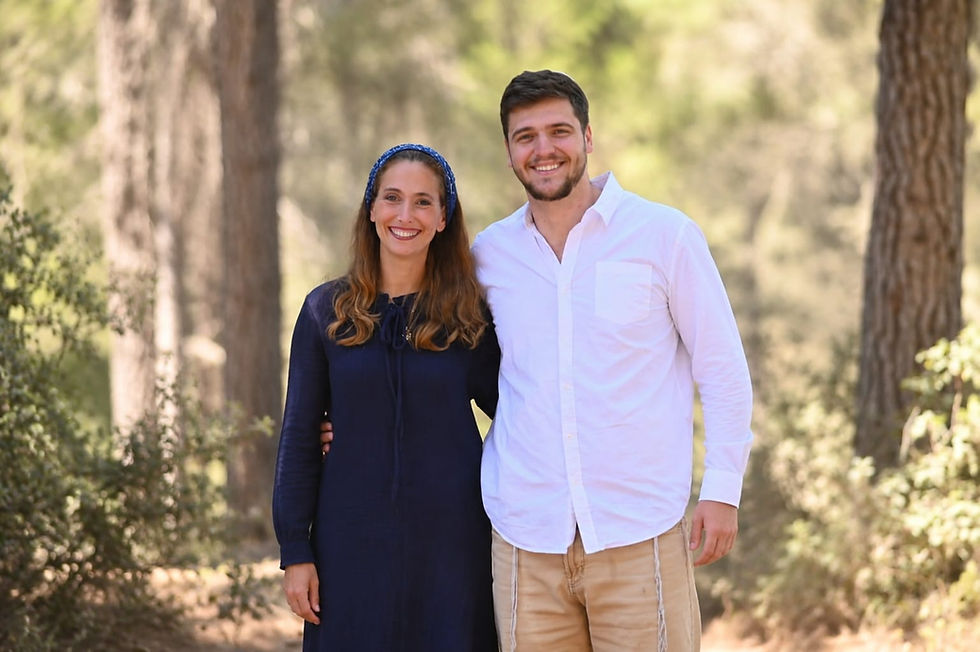
To my precious son, Gavriel,
I honestly have no idea if or when you will read this. Maybe sometime before the wedding. Maybe years from now. Maybe never. But here I go anyway.
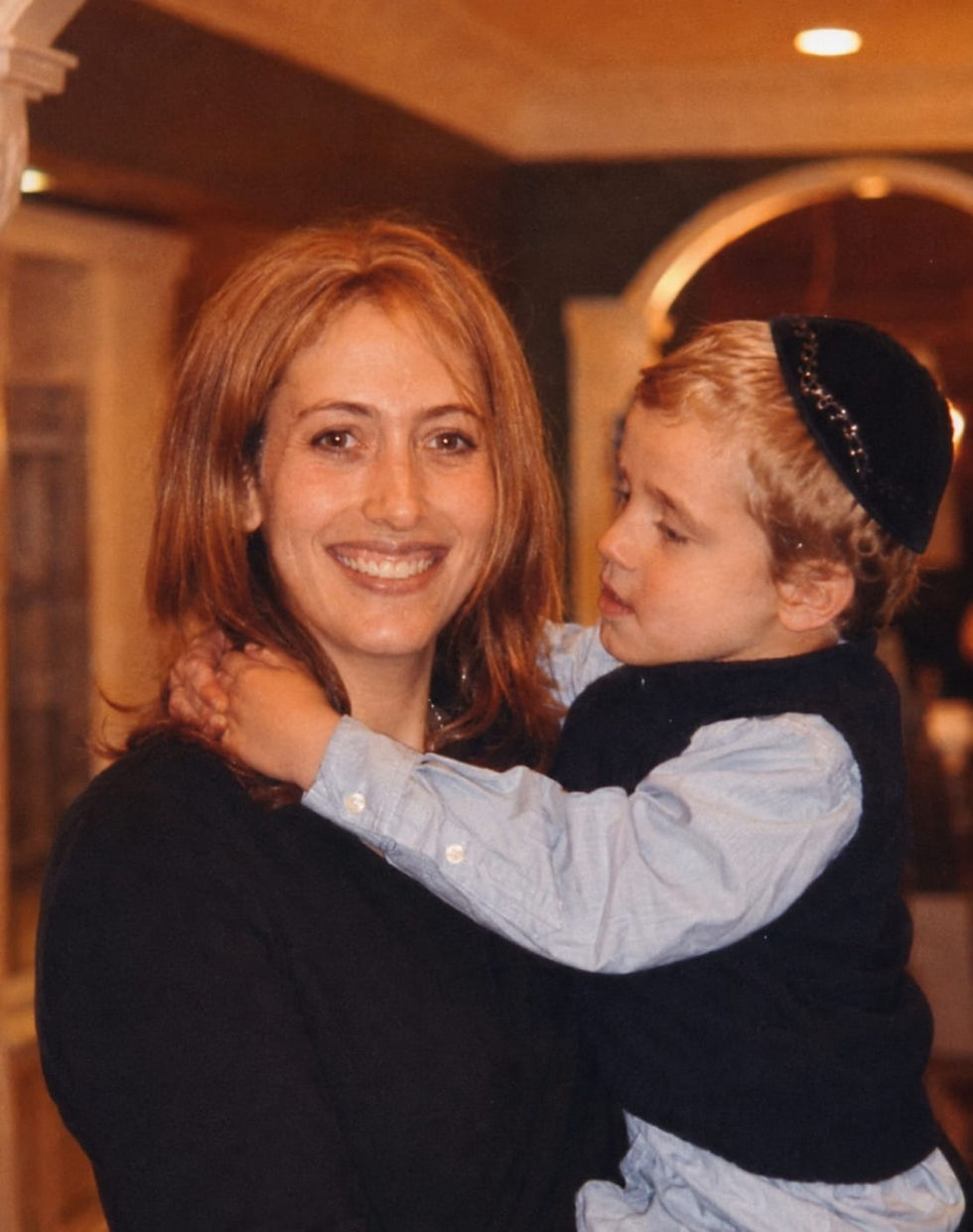
And if you are reading this years from now, hopefully you are doing so while sitting in a loud house full of children, with Elliana laughing at something ridiculous you said five minutes earlier, because that feels much more like you than some dramatic mother-son moment over a parsha essay.
This Wednesday, בעזרת ה׳, you will stand beneath the chuppah with Elliana. You will walk into the sacred, awe-filled, beautiful task of building a home together. And as I sat with Parshat Beha’alotcha this week, I found myself returning again and again to a single phrase:
“והאיש משה עניו מאד מכל האדם אשר על פני האדמה”“And the man, Moshe, was exceedingly humble, more than any person upon the face of the earth.”
The Moment Moshe Becomes an Ish
The Torah calls him “האיש משה” — “the man Moshe.”
The question is impossible to ignore. Why here? Why now?
Moshe has already shattered Egypt. He has stood before Pharaoh. He has split the sea. He has ascended Sinai and brought down the Torah itself. If the Torah wishes to call him an איש, surely there were earlier moments that looked more heroic, more triumphant, more obviously great.
But the Torah waits until this moment, after Moshe has already carried the impossible burden of leading the nation, after exhaustion and collapse have stripped away every illusion of control, and after his own sister speaks against him.
Something about this sequence transforms Moshe from a leader into an איש.
The Torah is using the word איש very intentionally.
Throughout Tanach, an איש is never just an adult male. The word often describes someone who has become internally formed, grounded enough to carry mission, responsibility, and relationship together. Yosef is called “איש מצליח” when he remains steady and responsible inside the chaos of Egypt. Boaz emerges as an איש because he combines strength with generosity, dignity, and protection toward Ruth. David becomes an איש through years of restraint, carrying pain and rejection without losing his connection to God or his responsibility toward the nation. An איש is someone whose inner world has developed enough that he can stand steadily inside complexity without constantly collapsing into fear, ego, impulsivity, or self-protection.
This is why the Torah does not call Moshe an איש at the height of the miracles. Splitting the sea reveals power. Ascending Sinai reveals greatness. But becoming an איש emerges specifically through the process of carrying responsibility, enduring fracture, remaining anchored through misunderstanding, and still retaining the ability to care deeply for other people.
I think the Torah is teaching us something timeless and true about the way boys become men.
The Breaking Point
Earlier in the parsha, Moshe breaks.
The people are complaining again. The burden of leadership has become unbearable. He is carrying the needs, fears, chaos, and emotional volatility of an entire nation, and suddenly the Torah allows us to hear the inner world of the man who always seemed larger than life.
He turns to God and says:
“לא אוכל אנכי לבדי לשאת את כל העם הזה כי כבד ממני”“I cannot carry this people alone. It is too heavy for me.”
Then come the even more painful words:
“ואם ככה את עשה לי הרגני נא הרג”“If this is how You deal with me, kill me now.”
These are shocking verses. Moshe is unraveling before us.
Chazal and the commentaries read Moshe’s collapse very carefully. Moshe is not complaining that there is too much work. He says, “לא אוכל אנכי לבדי לשאת את כל העם הזה כי כבד ממני” — “I cannot carry this entire people.” The burden is the people themselves.
Rashi explains that Moshe compares them to a burden too heavy to carry. The Ramban notes that Moshe reaches a point of emotional and psychological exhaustion. The Netziv develops the idea further and explains that the nation had become entirely dependent upon Moshe, to the point where he alone was carrying the weight of their instability, complaints, and demands. Moshe could confront Pharaoh and ascend Sinai, but here he encounters something harder: the endless responsibility of carrying human beings.
This perhaps is the first great truth about becoming an איש.

A child experiences life primarily through the self. His fears. His needs. His frustrations. His dreams.
A man discovers that other people now live inside his responsibility.
He learns that love means carrying real weight.
A man slowly begins to realize that his life is no longer his alone. His choices shape the people beside him, his strength can calm fear in another person, and his presence itself can become a kind of home. Love asks a person to grow larger than himself, to widen enough internally to carry responsibility, relationship, and care for others all at once.
Carrying the Weight of Others
My Gavriel, I think the challenges of the last few years forced you into this place long before most young men arrive there.
There are moments in history that pull boys abruptly across the threshold into manhood. A young man enters Gaza carrying a weapon, but what he truly carries is the awareness that lives depend on him. Suddenly, he is responsible for the people beside him. Suddenly, his choices matter in irreversible ways. Suddenly, he understands that courage is not a feeling but a burden.
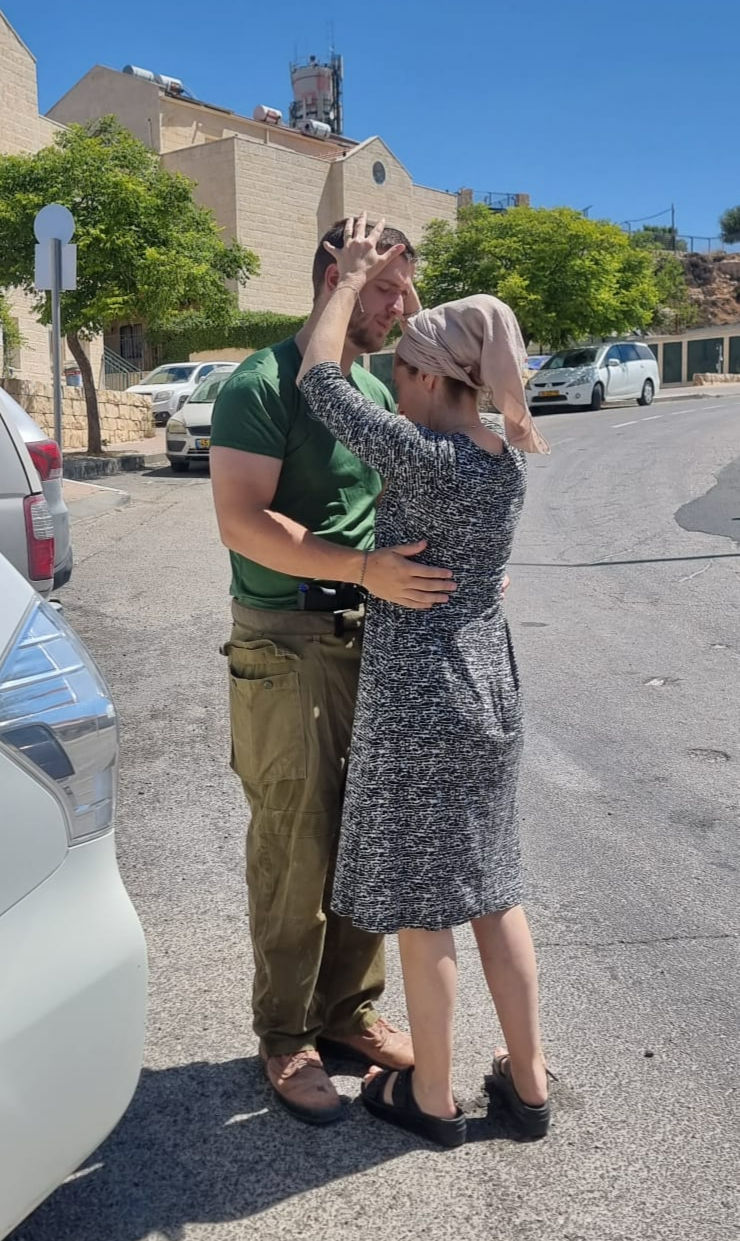
And somewhere inside all of this, you were carrying your mother too.
You carried the knowledge that I was terrified for you. You learned, like so many soldiers, to protect the people who loved you from the full truth of what you were seeing and feeling. You learned how to sound calm. How to say “I’m fine” when you were exhausted. How to continue functioning while holding grief, fear, responsibility, and loss inside your own body.
This changes a person.
And this is exactly why Moshe’s collapse matters so much. The Torah is showing us that becoming an איש does not happen at the moment of triumph. It happens at the moment when the weight becomes unbearable and a person realizes that strength alone is insufficient.
The Humility Born Through Breaking
The Sforno writes that Moshe’s greatness lay in the fact that his personal self had become almost transparent. His ego no longer occupied the center. His pain did not consume his vision. He was able to remain fully devoted to the mission and the people even while personally suffering.
But that kind of humility is not natural. It is born through breaking.
As long as a person still imagines himself to be the center of the story, he can only carry so much. Eventually reality collides with the fantasy of self-sufficiency. Eventually every human being reaches the profound recognition that he cannot fully control life, people, outcomes, or suffering.
And that breaking can destroy a person.
Or it can deepen him.
Moshe’s breaking becomes the doorway into humility because it strips away the illusion that he alone can carry the nation. Immediately afterward, God commands him to gather the seventy elders. Moshe learns that leadership does not mean omnipotence. It means becoming a vessel through which responsibility can flow.
Why the Torah Places “Ha'ish Moshe” Beside Miriam’s Sin
Then comes the astonishing transition into the story of Miriam.
Miriam speaks against Moshe. Aharon joins her. The Torah does not fully spell out their criticism, but Chazal understand that they are questioning Moshe’s separation from ordinary family life and ordinary marital life. They are speaking about the most intimate parts of who he has become.
Here the Torah inserts the verse:
“והאיש משה עניו מאד”
Rashi explains that the Torah places this verse specifically here to explain Moshe’s silence. Miriam and Aharon speak against him, yet Moshe does not respond at all. The Torah therefore tells us, “והאיש משה עניו מאד.” His humility explains his silence. Ibn Ezra adds that Moshe did not feel the need to defend his honor because he was entirely uninterested in status or self-glorification. The verse is not describing passivity. It is describing a person whose sense of self no longer depends on protecting his image.

But I think there is something even deeper happening.
The Torah places “והאיש משה” specifically beside Miriam’s transgression because this is the final stage of becoming a man.
A boy defines himself through how others see him.
A man becomes capable of remaining anchored even when misunderstood.
A boy experiences criticism as annihilation.
A man can remain connected to his mission even when others fail to fully understand him.
Moshe no longer needs to spend his energy defending his image because his identity has become rooted somewhere deeper than approval.
And this is why, when Miriam is punished, Moshe immediately prays:
“א-ל נא רפא נא לה”
Moshe’s attention moves immediately toward Miriam’s suffering. His concern is no longer centered on defending himself or protecting his honor, but on the pain of another human being.
This is the greatness of humility according to the Torah. Humility is becoming free enough from yourself that you can still see other people clearly, even when your own pain would justify blindness.
The Kind of Man Who Can Build a Home
Gavriel, this may be one of the deepest challenges of marriage.
Marriage will ask you to carry another person’s heart alongside your own. There will be moments when you feel unseen, misunderstood, overwhelmed, exhausted, or hurt. There will be moments when your instinct will be to defend yourself, retreat into yourself, or demand that your own pain become the center of the room.
But the Torah’s vision of an איש is far larger than physical strength or independence.
The Torah’s vision of an איש is someone whose inner world has become wide enough to hold responsibility, tenderness, humility, truth, and relationship all at once. He no longer experiences life only through the question, “What do I need?” but through the question, “What is being asked of me?” His strength creates safety for other people, his presence becomes a place where others can rest, and he develops the capacity to carry pain without becoming consumed by it, to love without controlling, and to lead without needing honor.
The world often teaches men that maturity means becoming harder. The Torah tells a far more complex story. The deepest form of strength is remaining deeply human after life has given you every reason to close yourself off.
I have watched life ask enormous things of you already, my son. I have watched you carry grief, responsibility, fear, and love all at once. I have watched you return from experiences that changed you forever while still somehow preserving your warmth, your gentleness, your humor, your loyalty, and your heart.
Protect those things carefully.
They are part of what makes you an איש.
Maybe this too is part of the Torah’s answer to Moshe’s breaking point. Immediately after Moshe cries out that he cannot carry the people alone, God responds by giving him others to help carry the burden. The seventy elders emerge directly out of Moshe’s collapse. The Torah does not glorify isolation. It teaches that human beings were never meant to carry life alone.

My Gavriel, after the heaviness you have already carried, after the pain and loss of war, after the responsibility of protecting fellow soldiers, after carrying the hearts of the people who love you back home, God has now given you the magnificent gift of Elliana.
I want you to know how deeply grateful I am for her.
She is radiant, wise, gentle, grounded, thoughtful, and full of heart. She brings warmth wherever she goes, along with the kind of calm presence that somehow makes everyone around her breathe a little easier. She also, thankfully, seems to genuinely enjoy you, which as your mother I deeply appreciate.
I have watched the way the two of you bring out goodness in one another. Around her, there is a softness and joy that returns to you. Around you, she shines even brighter. There is something profoundly moving about seeing the son I love so much finding a partner who can walk beside him with such grace, depth, kindness, laughter, and love.
You no longer have to carry life alone.
This too is part of becoming an איש. A man learns how to carry responsibility, but he also learns how to build partnership. He learns how to trust another person enough to let them share the weight of life beside him. Moshe’s breaking becomes the very moment that opens the door for others to stand with him, and in your own life, it feels as though some of the deepest experiences you have endured have led you toward Elliana, toward the building of a home where strength, tenderness, courage, laughter, faith, and love can all live together.
As you stand beneath the chuppah this week with Elliana, my blessing for both of you is that you continue growing together into the kind of people who create space for love, truth, humility, and the presence of God to dwell within your home.
With all my heart,
Ima


Comments