.webp)
The Space God Leaves
How the Spies Lost Themselves—and How Great Marriages Find Themselves
Dedicated with love to the memory of our holy soldiers who fell sanctifying God’s Name and defending the Land of Israel: Ephraim son of Liat and Shmuel, Yosef Malachi son of Dina and David, Eliyahu Moshe Shlomo son of Sarah and Shimon, Yosef Chaim son of Rachel and Eliyahu, Netanel son of Revital and Elad, Yakir son of Chaya and Yehoshua, and Ran son of Sara and Kenny. May their memories forever be a blessing and an inspiration.
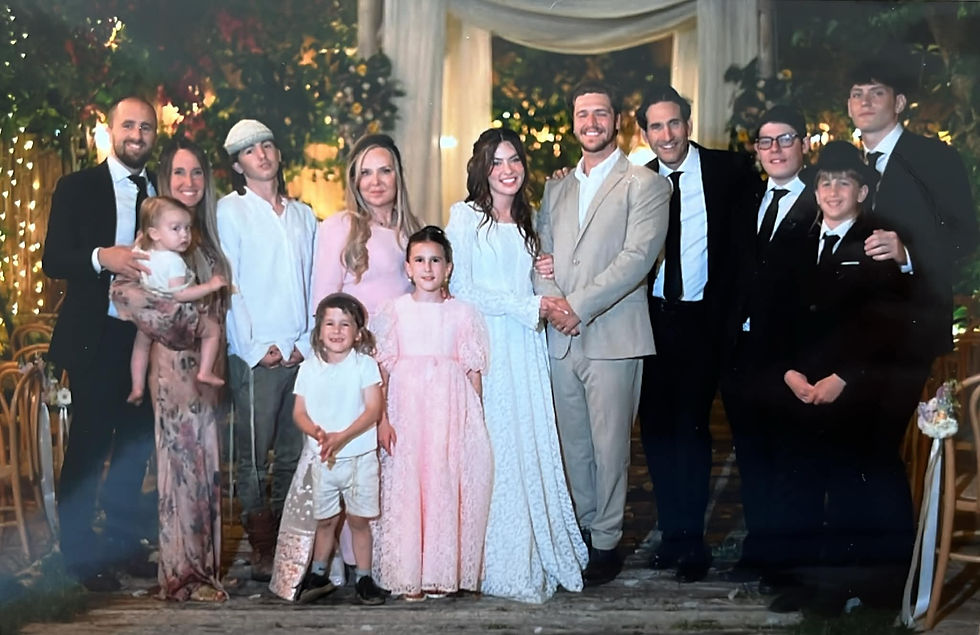
Last night was magical.

Watching Gavriel and Elliana together filled my heart in a way that's hard to put into words. As a mother, seeing their happiness, their love for each other, and the excitement shining on their faces was simply overwhelming.
Seeing Gavriel standing with love, calm, and certainty in his eyes was remarkable. Elliana, glowing with joy, looked up at Gavriel with warmth and affection, resting her head gently on his shoulder. It felt as though they belonged together in the most natural way.
The highlight of the evening was the explosion of emotion at the kisei kallah. As the bride and groom greeted one another, both with joyful tears in their eyes, all the guests seemed to hold their breath. Their happiness was so genuine and overflowing that it filled my entire being with joy.
There was something deeply reassuring about their union. Being in their presence felt like coming home: safe, calm, natural, and exactly right.
Watching Gavriel and Elliana together, I found myself thinking about the sacred space that exists between two people. A marriage begins with possibility, freedom, and countless choices that have not yet been made. That space can become a source of blessing, growth, curiosity, and holiness. It can also become a place where people lose themselves, carry burdens that do not belong to them, or become consumed by fears about the future.
This week's parsha, Shelach Lecha, explores exactly that question: what happens when God creates space and asks human beings to live inside it?
When God Creates Space
Parashat Shlach Lecha opens with a choice.
Hashem says to Moshe:
שְׁלַח־לְךָ אֲנָשִׁים
"Send for yourself men."
Rashi stops at those two words — לְךָ, for yourself — and says simply:
לדעתך
"According to your own understanding."
God is creating space. For the first time at this scale, the Jewish people are being asked to live inside a place where God is giving room for human judgment. A choice must be made, judgment must be exercised, and responsibility must be carried. The central question of the parsha is what happens inside that space.
For most of the Torah until this moment, the relationship between God and Israel runs on direct command. The people are carried through the wilderness by clouds, manna, miracles, and constant guidance. Shelach Lecha introduces something new. God opens His hand and creates room for human judgment. The spies are given an opportunity to act within that freedom.
Moshe's instructions are surprisingly simple:
וּרְאִיתֶם אֶת־הָאָרֶץ מַה־הִוא
See the land.
וְאֶת־הָעָם הַיֹּשֵׁב עָלֶיהָ
See the people.
הֶחָזַק הוּא הֲרָפֶה
Are they strong or weak?
Their assignment is clear: observe, report, and bring back what you see. The spies are being asked to serve as witnesses.
How Good People Lose Their Way

The Torah goes out of its way to establish that they were worthy of that responsibility.
כולם אנשיםThey were all distinguished men.
Rashi comments:
באותה שעה כשרים היו
"At that moment, they were righteous."
Those words invite us to pay close attention to what follows. The spies begin as righteous men. Their failure emerges later through a subtle shift in how they understand their role.
Given enough uncertainty, even good people can begin carrying responsibilities that do not belong to them. Concern can expand into control. Care can expand into ownership. Observation can expand into judgment. The spies gradually move beyond the boundaries of their assignment and become enmeshed with a future that is not theirs to carry.
Everything changes with a single word:
אפס
"However."
The report begins with enthusiasm. The land is fertile, the fruit is magnificent, and God's promise is confirmed. The word efes changes the direction of the conversation. The spies move beyond describing reality and begin drawing conclusions about what should happen next. Their role expands from witnessing to deciding. The future of the nation becomes their burden, and the weight of that burden begins to distort their vision.
The Burden of the Future
What follows is a familiar human experience. When we take responsibility for outcomes that lie beyond our role, the task becomes heavier than we can realistically carry. The spies become preoccupied with questions that were never theirs to answer. Instead of focusing on what they saw, they begin focusing on what might happen. Their attention shifts from the assignment in front of them to a future they cannot control.
This is what we would call enmeshment: the collapse of the boundary between what belongs to me and what belongs to someone else. The spies genuinely cared about the people. Their concern was sincere. Their mistake lay in carrying a burden that belonged elsewhere. What belonged to God gradually became their responsibility, and under that weight their perspective began to change.
Grasshoppers in Their Own Eyes
The Torah itself reveals how complete that shift became.
The spies said:
וַנְּהִי בְעֵינֵינוּ כַּחֲגָבִים וְכֵן הָיִינוּ בְּעֵינֵיהֶם
"We were like grasshoppers in our own eyes, and so we were in their eyes."
The order is striking. The spies first describe how they see themselves and only afterward describe how they imagine the giants see them. The Torah is drawing our attention to a profound psychological shift. Their focus has moved away from the land they were sent to observe and away from the mission they were given. Their attention has moved entirely into the minds of the giants.
The question has changed from:
What do we see?
to:
How do they see us?
Once the spies begin living inside the imagined perspective of the giants, they lose access to their own. Their identity becomes tied to someone else's gaze. The land is viewed through fear, and they themselves become small in their own eyes. By the time they describe themselves as grasshoppers, the battle has already been lost internally.
The Courage to Stay in Your Lane
Kalev and Yehoshua saw precisely the same land, the same cities, and the same giants. Their clarity emerged from remaining faithful to their assignment. They continued to witness, report, and respond without taking ownership of the outcome. Their focus remained on what belonged to them, while the larger questions of destiny remained in God's hands.
עֲלֹה נַעֲלֶה וְיָרַשְׁנוּ אֹתָהּ
"We shall surely go up and inherit it."
Their confidence grew from clarity about responsibility. They understood that their role was to answer God's call while allowing God to carry the future.
A Sacred Space
This may be why this parsha feels so appropriate for Gavriel and Elliana as they begin their married life together.
A new marriage contains something very similar to what God created at the beginning of Shelach Lecha: space. Space for choices, growth, curiosity, discovery, and mistakes. Space for two people to learn each other's worlds slowly, with patience and love.
The Land of Israel is holy because it is a place where God invites human beings to become partners in creation. Marriage is built on the same invitation. The sacred space between husband and wife is filled with possibility. That space deserves to be protected, guarded, and treated with reverence.
Curiosity becomes one of the great protectors of a marriage. The spies stopped being curious and began drawing conclusions. Healthy marriages flourish when observation comes before judgment, when questions come before assumptions, and when each partner remains interested in discovering the other rather than deciding who the other person is.
Challah: Building Before You Know
The conclusion of the parsha offers a remarkable response to the spies' failure. The Torah
immediately turns to two mitzvot: challah and tzitzit.
At first glance, they seem unrelated. Yet both are built around a space of choice.
If you bake dough, separate challah.
If you wear a four-cornered garment, attach tzitzit.
In both cases, a person first enters a space of freedom. There is room, agency, and initiative. The mitzvah then teaches how to live inside that freedom without becoming overwhelmed by it.
Challah addresses agency. The spies stood outside the land trying to determine whether the future was secure enough to enter. Challah begins after the decision has already been made. You have entered, planted, harvested, kneaded, and built. The mitzvah teaches a person to step into life, create something meaningful, and then sanctify it. Trust grows through participation rather than certainty.
Elliana, this mitzvah speaks directly to the sacred role you are stepping into.
Every Jewish home begins with an act of faith. A woman creates the space before she can fully see the future. She builds the home, fills it with warmth, relationship, hospitality, children, Torah, laughter, and life. She creates first and sanctifies afterward.
Challah reminds us that holiness is discovered within the home we build. The dough comes first. The blessing emerges from within it.
Tzitzit: Remembering Who You Are
Tzitzit addresses identity.

The spies were sent:
לָתוּר אֶת־הָאָרֶץ
To scout the land.
The Torah concludes:
וְלֹא תָתֻרוּ אַחֲרֵי לְבַבְכֶם וְאַחֲרֵי עֵינֵיכֶם
Do not scout after your hearts and your eyes.
The shared verb creates an unmistakable connection. The spies followed their eyes until fear shaped their identity. Tzitzit teaches a person to remember who they are before interpreting what they see. The covenant becomes an anchor that keeps identity rooted within rather than placing it in the hands of others.
Gavriel, this mitzvah speaks directly to the sacred role you are stepping into.
A husband helps create the identity of the home. Identity creates security. Identity establishes healthy boundaries. Identity gives a family a stable sense of who they are and what they stand for. As Elliana creates the home, you will help protect it. As she bakes the bread, you will help preserve the values, vision, and boundaries that allow that home to flourish.
Tzitzit reminds a man to remain firmly rooted in his covenant, his values, and his purpose. A home becomes strong when its identity is grounded within rather than shaped by the pressures and opinions that surround it.
A Home Built on Holy Boundaries
Together, challah and tzitzit become the Torah's answer to the spies.
The spies were given freedom and became overwhelmed by it. They confused observation with responsibility and picked up a burden too large to carry. Challah and tzitzit teach the next generation how to live inside freedom without becoming consumed by it, how to exercise agency without taking over responsibility for the entire future, and how to remain grounded in their own identity while facing uncertainty.
Gavriel and Elliana, marriage is one of the holiest spaces God creates in this world. Like the Land of Israel, it is a place where human beings are invited to become partners with Him in creation. That partnership requires trust, curiosity, healthy boundaries, and the wisdom to know what belongs to you and what belongs to God.
May you cherish the sacred space that has opened between you. May you remain curious about one another for decades to come. Elliana, may you build a home filled with warmth, faith, hospitality, Torah, and holiness. Gavriel, may you create a home grounded in identity, security, purpose, and healthy boundaries. May you each carry your own sacred responsibilities with wisdom and joy, trust God with the future, and discover that the home you build together becomes a place where His Presence is always welcome.
May your marriage be filled with blessings, growth, laughter, and peace, and may the sacred space between you become a source of light for your family, your community, and everyone fortunate enough to enter your home.
יברכך ה׳ וישמרךיאר ה׳ פניו אליך ויחנךישא ה׳ פניו אליך וישם לך שלום


Comments