.webp)
The Blessing of Being Seen
Updated: 6 days ago
What Yaakov and Moshe Teach Us About Knowing Who We Are—and Becoming One
Parshat Vezot Habracha/Simchat Torah
This week’s Torah is dedicated לעילוי נשמת our fallen heroes: Ephraim ben Liat v’Shmuel, Yosef Malachi ben Dina v’David, Eliyahu Moshe Shlomo ben Sarah v’Shimon, Yosef Chaim ben Rachel v’Eliyahu, Netanel ben Revital v’Elad, Yakir ben Chaya v’Yehoshua, Ron ben Sara v’Kenny, Harel ben Yonat v’Shlomo, and Tomer ben Adina v'Izik. This week also marks the azkara of Yosef ben Dina v’David. May their neshamot have an aliyah, and in their merit may we learn to come together as a nation without losing what makes each of us distinct, and may we always have the ayin tovah to find the me’at tov—the point of good—in one another.
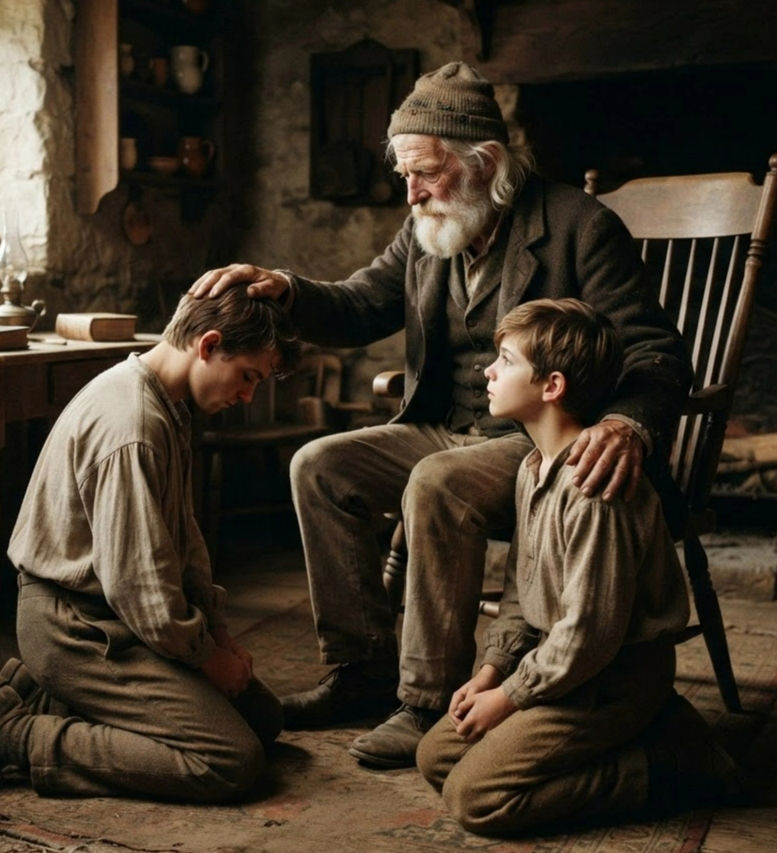
“These Are Not Brachot!”
When I was a child, I had to memorize Birkat Yaakov, Yaakov’s final blessings to his sons. I remember being bothered.
“These are not brachot,” said my young self.
Yehudah gets kingship. Yosef gets double. But Reuven gets pachaz kamayim—“impetuous like water.” Shimon and Levi hear about their anger and violence and are told they will be scattered throughout Israel.
How is that a bracha? And how is that fair?
A bracha was supposed to be good. Everyone should get one, and everyone’s should be good. Fair meant equal. Somewhere in that childhood understanding was another assumption: a parent’s job is to make everything okay—to keep everyone safe, smooth out the differences, make sure no one walks away with less.
I learned Birkat Yaakov as a child. Apparently, I kept my childhood understanding of it for decades.
This year, reading Moshe’s final blessings in V’Zot HaBerachah, I noticed that they felt different. Calmer than Yaakov’s blessings. More comfortable.
But the Torah calls Yaakov’s words blessings.
Had I been misunderstanding what a bracha is—and what a parent’s blessing is meant to do?
A Father’s Bracha
Yaakov knows his boys as only a parent can.
He knows their temperaments, their strengths, their histories and their mistakes. He does not give twelve versions of the same blessing.
אִישׁ אֲשֶׁר כְּבִרְכָתוֹ בֵּרַךְ אֹתָם“Each according to his blessing, he blessed them.”
Abarbanel explains that Yaakov speaks according to the טבע בניו ומדותיהם—the nature and character of his sons.
That itself is a bracha.
To be truly known by a parent is one of the greatest blessings a child can receive.
Yaakov does not protect his sons from seeing themselves. He does not make their blessings equal, soften their differences, or reshape them according to what would make a father more comfortable. He presents each son with his own self.
This is who you are. This is your strength. This is where that strength can become dangerous.
Being seen that clearly gives a child permission to know himself and, from there, to grow.
As a young mother, I used to find Yaakov’s family reassuring for another reason. I figured I was doing pretty well. My children had not sold one another.
With more years of parenting behind me, the story reads differently.
Families are messy. Children hurt one another. Parents make mistakes. Siblings become jealous. People who love each other can still cause one another pain. As a parent, I am being asked to see that clearly, like Yaakov.
That is what makes Yaakov’s family strangely comforting now, from this new perspective.
Yaakov knows the mess. He knows what his children have done and how they have hurt one another. He does not hide it.
And he still blesses them.
Rashi notices that even after words of tochacha, rebuke, the Torah concludes:
וַיְבָרֶךְ אוֹתָם“And he blessed them.”
Yaakov does not need perfect children in order to bless them, and he does not need to pretend everything is fine.
He knows them. And he blesses them.
Where Yaakov Ends
Chazal connect Yaakov’s final blessing directly to Moshe’s.
Yaakov’s ends with וזאת, and Moshe’s begins:
וְזֹאת הַבְּרָכָה אֲשֶׁר בֵּרַךְ מֹשֶׁה
The Sifrei says that Moshe begins ממקום שסיים יעקב אבינו—from the place where Yaakov Avinu finishes. Moshe does not replace Yaakov’s blessing. He adds to it.
But the circumstances have changed.
Yaakov is a father speaking to his sons as the family prepares for the long years of Galut, exile. Moshe is Rabbeinu, our teacher, speaking generations later as that family prepares to enter its land.
Rashi writes:
אתה מוצא בכל השבטים ברכתו של משה מעין ברכתו של יעקב
“In every tribe, you find Moshe’s blessing reflecting Yaakov’s blessing.”
Moshe sees the same distinct identities. But the sons have become a nation.
The question is no longer only who they are, but what those particular qualities can contribute to their nation and their land.
From Identity to Contribution
Levi makes this especially clear.
Yaakov sees Levi’s intensity and where it can lead:
אָרוּר אַפָּם כִּי עָז“Cursed is their anger, for it is fierce.”
He says Levi will be scattered:
אֲפִיצֵם בְּיִשְׂרָאֵל
Generations later, Levi is still Levi. But Moshe says:
יוֹרוּ מִשְׁפָּטֶיךָ לְיַעֲקֹב וְתוֹרָתְךָ לְיִשְׂרָאֵל“They will teach Your laws to Jacob and Your Torah to Israel.”
Levi is indeed dispersed throughout Israel, but now that dispersion has a national purpose.
The quality has found its contribution.
The pattern appears elsewhere too. Yehudah’s leadership serves his people. Gad’s strength serves Israel. Zevulun goes out while Yissachar remains in his tents, and Moshe blesses them together.
No one needs to become someone else. Their differences are part of what the nation needs.
The Father and the Teacher
The difference between the two sets of brachot draws attention to the people giving them.
We call one Yaakov Avinu and the other Moshe Rabbeinu.
One is the father. One is the teacher.
A parent and a teacher can look at the same child and see different things because they stand in different places.
A parent knows the history, the temperament, the patterns that have been there since childhood. Yaakov’s bracha comes from that deep knowing: This is who you are.
A teacher meets that same person with a little more distance and can ask a different question: Where can these particular qualities take you?
Both voices are necessary. The teacher needs Yaakov’s gift: to see the person before the potential. The parent needs Moshe’s: knowing a child deeply does not mean knowing the limits of who that child can become.
But holding both creates a challenge. How do we truly know someone without trapping them inside what we already know about them?
The closer we are to someone, the more history we carry. We remember old mistakes and familiar patterns. Deep knowledge can help us see a person clearly, but it can also make it harder to notice when that person has begun to change.
Leaving Room for Movement
This week, Yaakov and Moshe both enter our sukkah as Ushpizin, the honored spiritual guests. During Sukkot we also mark the yahrzeit of another Rabbeinu, Rebbe Nachman of Breslov.
In Azamra, Rebbe Nachman teaches:
צָרִיךְ לְחַפֵּשׂ וְלִמְצֹא בּוֹ אֵיזֶה מְעַט טוֹב“One must search and find in another person some small point of good.”
Finding the me’at tov, the small point of good, does not mean denying everything else we know about someone. Yaakov certainly does not do that.
Rebbe Nachman says that through finding that point, we are מעלה אותו—we raise the person.
The language is striking. The me’at tov leaves room for movement. We can know someone’s history without deciding that history is their future.
It allows Yaakov’s deep knowing and Moshe’s forward-looking blessing to sit together: to see who a person is while leaving room for who that person can still become.
What is true inside a family becomes more complicated when that family becomes a nation.
From Family to Nation
Moshe stands at the edge of Eretz Yisrael with the descendants of Yaakov’s very different sons. The question now is whether those differences can belong to something larger.
The structure of Moshe’s blessing is striking.
Near its beginning:
יַחַד שִׁבְטֵי יִשְׂרָאֵל“Together, the tribes of Israel.”
Then Moshe blesses them individually.
And at the end he returns to the whole:
אַשְׁרֶיךָ יִשְׂרָאֵל מִי כָמוֹךָ “?Fortunate are you, Israel. Who is like you”
Klal. Prat. Klal. The whole. The individual. The whole.
Perhaps that is part of our continuous aliyah, ascent, into Eretz Yisrael. Our ancestors crossed the Jordan once. We are still learning how to live here together.
Not by becoming the same. Each shevet, tribe, has its bracha. Each has something to contribute that belongs not only to itself but to the whole.
After naming all those differences, Moshe ends:
אַשְׁרֶיךָ יִשְׂרָאֵל מִי כָמוֹךָ עַם נוֹשַׁע בַּה׳“Fortunate are you, Israel. Who is like you, a nation delivered through Hashem?”
After all the individual brachot, all the different strengths, histories, roles, and contributions, Moshe brings them back together as one people. And even then, the source of their strength is not themselves. It is Hashem.
Now I can return to the brachot that bothered me as a child.
I thought a bracha meant making things fair. As a young mother, I thought my job was to keep everyone safe and somehow make everything okay.
Yaakov offers something more demanding and, I now think, more loving.
A parent’s blessing is not to make every child’s portion equal or to protect a child from seeing what is difficult. It is to see the child who is actually there—to know the gifts, the temperament, the history, even the places where those gifts can go wrong—and still bless that child.
Moshe takes that blessing one step further. Who you are is not only yours. Your particular strengths have something to give.
And Rebbe Nachman reminds us that even when we know one another well—even when we know the history and the mistakes—we must continue searching for the me’at tov, the small point of good from which there can always be more aliyah, more growth.
Maybe that is part of the work of becoming a nation in Eretz Yisrael.
Not to become the same.
Not to pretend our differences are not real.
But to see one another clearly, to keep looking for the good in one another, and to discover what each of us can bring to the whole.
Yaakov begins with twelve very different sons.
Moshe stands generations later before twelve very different tribes.
And after blessing each one for who they are, he looks at all of them together and says:
אַשְׁרֶיךָ יִשְׂרָאֵל מִי כָמוֹךָ“Fortunate are you, Israel. Who is like you
”
Perhaps that is the bracha I could not understand as a child.
To be deeply yourself.
To keep growing.
And to know that who you are has a place among us.

This is such a powerful lesson for us as parents, grandparents and teachers. Seeing the me'at tov in each child, seeing his or her individual potential rather than some agenda of our own of how they should turn out -- this leads more often than not to young people and adults who can see their own potential and be brave enough to pursue their individual greatness.