.webp)
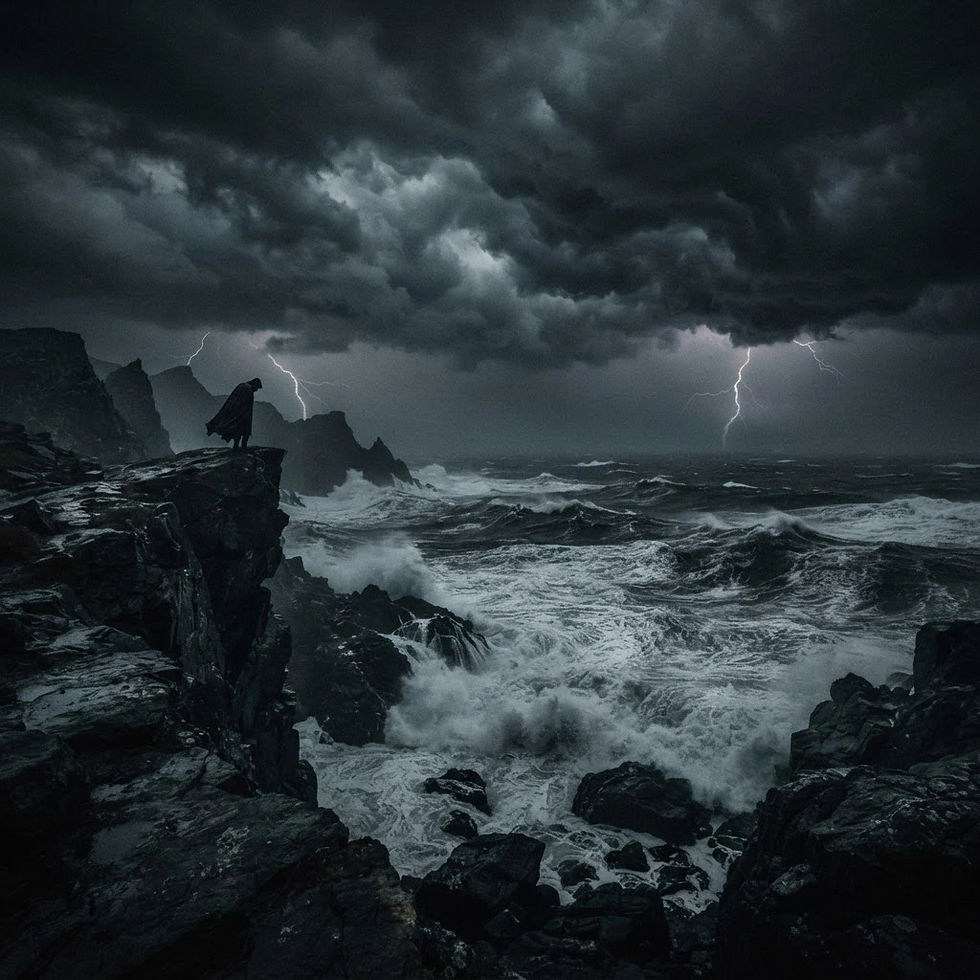
Are You Afraid of the Dark?
October 7th, Faith, and What Bereishit Teaches Us About Finding Security Before We Can See the Light
This Dvar Torah is dedicated לעילוי נשמת our fallen heroes: Ephraim ben Liat v’Shmuel, Yosef Malachi ben Dina v’David, Eliyahu Moshe Shlomo ben Sarah v’Shimon, Yosef Chaim ben Rachel v’Eliyahu, Netanel ben Revital v’Elad, Yakir ben Chaya v’Yehoshua, Ron ben Sara v’Kenny, Harel ben Yonat v’Shlomo, and Tomer ben Adina v’Izik. May their memories be a blessing, and may their merit bring strength, healing, unity, and redemption to their families and to all of Klal Yisrael.
Afraid of the Dark
Raise your hand if you’re afraid of the dark.
Do your kids need the hallway light left on at night? Do you (be honest)? Does driving down a dark road feel just a little scarier than driving down that exact same road during the day?
Think about every scary movie you’ve ever seen. The really scary scenes always happen in the shadows, at night.
We humans are uncomfortable in darkness. We like to see where we are going. We like to know what is around us. Light helps us get our bearings. Darkness takes that away.
Which makes the opening of Bereishit so curious.
Hashem creates the heavens and the earth, and the first description we read is:
והארץ היתה תהו ובהו וחשך על פני תהום ורוח אלקים מרחפת על פני המים.
The earth was tohu va-vohu—unformed, without recognizable shape or order—darkness was over the face of the deep, and the spirit of God hovered over the waters.
Why darkness? Why tohu va-vohu? Why does everything begin without form or clarity? What exactly is Ruach Elokim doing there, merachefet over it all?
Is that feeling of insecurity somehow part of Creation itself? Why would Hashem begin the world in a state where, if we had been there, we would have had no idea where we were or what was coming next?
What Does a Beginning Look Like?
We might have expected Creation to begin with יהי אור.
Light. Clarity. Let's get this world started.
But Hashem chooses to wait before turning on the light.
Once we notice that, this kind of beginning starts to feel familiar. A baby begins in darkness, surrounded by water, hidden inside its mother.
Life begins where we can't yet see what it is becoming.
That may be exactly what makes beginnings so uncomfortable for us. We want to see. We want to know what something is, where it is going, and how it is going to turn out.
Hashem seems surprisingly comfortable allowing a beginning to remain unclear for a while.
Before anything has been defined, something else happens first.
Merachefet
ורוח אלקים מרחפת על פני המים.
The spirit of God hovers over the waters.
Before the light, before separation, before anything has been named, Ruach Elokim is already there.
Remarkably, the root of merachefet appears only twice in the Torah: here, over the waters at the birth of the world, and near the other end of the Torah in Ha'azinu:
כנשר יעיר קנו על גוזליו ירחף.
Like an eagle awakening its nest, hovering over its young.
Now merachefet gives us an image. A parent hovering over its young.
Rashi describes the eagle in beautiful language. The mother eagle does not press its weight heavily upon its young. It hovers, נוגע ואינו נוגע—touching and yet not touching.
That changes the way we see the opening of Bereishit.
Hashem is completely present at the beginning of Creation, while the world is still tohu va-vohu. Its unfinishedness is there by design. Hashem allows the process to unfold without rushing it toward clarity. His presence comes first, hovering gently over the water.
There is something incredibly tender in that image.
You don't have to know what you are yet. I am here.
The image of the mother bird reminds me of a small child who falls asleep in the car. He has no idea where he is going, and it doesn't particularly concern him. He doesn't need to stay awake to follow the route or make sure he gets home. He falls asleep because he knows, with the complete confidence of a child, that Abba and Ima have got him.
He has almost no information and an enormous sense of security.
Maybe that is the first surprise of Bereishit. We tend to look for security in knowing where we are going, in seeing and understanding. Merachefet offers another kind of security: relationship before information.
The world cannot yet see what it is becoming, but it is being held while it becomes.
Redemption Is Already Hovering
Chazal add something extraordinary.
Bereishit Rabbah looks at the words ורוח אלקים מרחפת, the spirit of God is hovering, and says:
זה רוחו של מלך המשיח.
This is the spirit of the King Mashiach.
I did not imagine we would find Mashiach here!
The world hasn't reached יהי אור yet. We are still standing in watery darkness and tehom, and Chazal already see the spirit of Mashiach hovering over the water.
We tend to picture redemption at the end of a process, when everything finally makes sense. Bereishit Rabbah places its first whisper at the beginning, while the world is still becoming.
The destination is somehow already held within the beginning.
That sharpens the meaning of merachefet. Hashem's presence is there, and the possibility of redemption is there too, long before either can be seen in the world taking shape below.
It is precisely in the beginning that looks completely unfinished that redemption has already begun.
Let There Be Light

Only now does Hashem say:
יהי אור.
Let there be light.
Light makes seeing possible.
Creation continues:
ויבדל אלקים בין האור ובין החשך.
God separated the light and the darkness.
One thing can be distinguished from another.
Then:
ויקרא אלקים לאור יום ולחשך קרא לילה.
God called the light Day, and the darkness He called Night.
Presence. Light. Differentiation. Naming.
Creation gradually takes form.
That sequence feels much like the human experience. We begin simply by being. With enough security and presence, we slowly begin to see ourselves more clearly. Then comes differentiation: this is me, this is you; this feeling belongs to me, that one belongs to you; this is my responsibility, that is yours; these are my gifts, those are yours; this is what I value, this is where my boundary lies.
Havdalah doesn't tear Creation apart. It allows each part to become itself.
When We Love Someone Who Is Still Becoming
This is where the opening of Bereishit begins to feel very close to home.
Anyone who has raised a child knows how tempting it is to turn on all the lights.
We see uncertainty and want to provide direction. We see a mistake coming and want to reroute it. Our rachmanut, our sympathy, can make us smooth the road because we worry that our child is too fragile for the bumps. Our own anxiety can make their uncertainty difficult for us to tolerate.
Merachefet offers another kind of closeness.
We can be deeply present while leaving room for a child to emerge. We can offer values, boundaries, warmth, wisdom, and guidance while allowing our children to discover what they like, what they believe, what they can handle, where they struggle, and who they are becoming.
The message underneath merachefet is gentle: I am here. Your unfinishedness doesn't frighten me. You have time to grow.
The goal of the eagle hovering over the nest is a young bird that will eventually use its own wings.
When that kind of merachefet was missing early in life, meaningful healing can sometimes mean returning to the beginning: to being before doing, to discovering that we can be loved before we perform, please, succeed or prove ourselves. From that place of safety and presence, differentiation can begin again. We can discover what belongs to us, where our boundaries lie, and who we are becoming.
What Happened to the Darkness?
Now let's go back to the first day of Creation, because something surprising happens to the darkness.
Hashem creates light, but the darkness remains.
ולחשך קרא לילה.
The darkness He called Night.
The darkness we first met was חשך על פני תהום—darkness over the deep, before separation, before names, before order.
Now it has become layla.
It has a name. It has boundaries. It has a relationship with day. It belongs within the rhythm of Creation.
This brings us back to the question we started with.
What actually frightens us about darkness?
The first darkness leaves us without orientation. We can't see where we are, what surrounds us or what is taking shape. The only security the Torah has given us so far is merachefet: we cannot see where this is going, but we are accompanied.
Layla is still dark, but now we know where we are. Night has a place. It belongs to a rhythm of ויהי ערב ויהי בקר—evening and morning.
There is another small detail here that I find fascinating.
When Hashem creates the light, the Torah says:
וירא אלקים את האור כי טוב.
God saw that the light was good.
The Torah does not say that about the darkness.
At least, not yet.
The early darkness may be difficult to experience as good because we still can't see what it is doing there. We are standing inside the process without the perspective of the finished Creation. We can't see the redemption yet.
But the story keeps going. Darkness becomes night. Night finds its place beside day. Evening and morning form a rhythm. Creation fills with boundaries, distinctions, life and purpose.
At the end of the sixth day, Hashem looks at the whole:
וירא אלקים את כל אשר עשה והנה טוב מאד.
God saw everything that He had made, and behold, it was very good.
Now the darkness is part of the כל.
The light, the night, the separations, the process, the world that has emerged from tohu va-vohu—all of it is contained in the whole that Hashem calls טוב מאד, very good.
From the vantage point of completed Creation, we will finally see what we could never have seen while standing in the darkness of the beginning.
Chatzot Layla
David HaMelech gives us a beautiful picture of what it can look like to live in a world that still contains night.
חצות לילה אקום להודות לך על משפטי צדקך.
At midnight I rise to thank You for Your righteous judgments.
The word חצות catches my attention.
David is in darkness, but he has orientation within it. This is chatzot. The night has shape. He knows where he is.
More importantly, he knows Who is there with him.
אקום להודות לך.
I rise to thank You.
We began by asking about fear of the dark. The deepest fear may be the feeling that we have lost our bearings, that we have no idea where we are, where we are going or what surrounds us.
Bereishit gives us two different kinds of security in the darkness.
At the beginning, before we can orient ourselves at all, there is merachefet. Like the child sleeping in the car, we don't know the route, but we know Who is carrying us.
Later there is layla. Darkness remains, but now it has a name and a place. David can stand at chatzot, know where he is within the night, and turn toward Hashem.
We can be held before we can see, and eventually we can learn to find our place even within the night.
The Darkness We Are Still Living Through
It is impossible for me to write about darkness, tohu va-vohu, and redemption without thinking about October 7th.
We woke that morning into a kind of darkness we could never have imagined. The darkness still hovers, and it is deep. So much of what had felt solid suddenly didn't. For many hours we didn't know what was happening, where people were, who was safe, how large the horror was, or what would come next.
We are still living inside questions whose answers we cannot see.
We want יהי אור.
We want clarity. We want our soldiers safe. We want grieving families held. We want healing for bodies and souls. We want to understand what kind of people we are becoming through all of this and where the story of Am Yisrael is going.
We want to know where we are in the night.
Bereishit gives us a way to stand inside a story whose ending we still cannot see.
ורוח אלקים מרחפת על
פני המים.
The spirit of God hovers over the waters.
Here the Midrash becomes even more powerful. Bereishit Rabbah reads the tohu, vohu, darkness and tehom of this very verse as the exiles of Jewish history. Then, right there, hovering over them, it finds רוחו של מלך המשיח—the spirit of Mashiach.
Chazal place redemption over the darkness before the darkness has cleared.
We cannot yet say where we are in this story. We cannot stand at chatzot and confidently point to our place on the clock. There is so much we still cannot make out.
In that sense, we have been thrown back into the first darkness of Bereishit, where security cannot yet come from knowing the route.
It comes from merachefet.
We have almost no information about where this story is taking us. Our faith asks us to remember Who is carrying us.
Hashem's presence comes before our understanding.
One day, may we be blessed to stand far enough into the light to look back at the whole journey and see the revealed good we are still praying for, the moment when we too can look at the whole and understand טוב מאד.
Until then, we don't have to see the whole picture to know that we are held within it.
The darkness feels so dark.
But somewhere above the waters, רוחו של מלך המשיח is already hovering.
Thank you for writing this, today is heavy and you gave that space and gave us hope.
OMG, Avigail! This brought tears to my eyes!! Your Torah thoughts on this heavy day left a deep impression on me. May we soon see the whole picture and understand the טוב מאד!